Summary of Recent Academic Activity
Publications
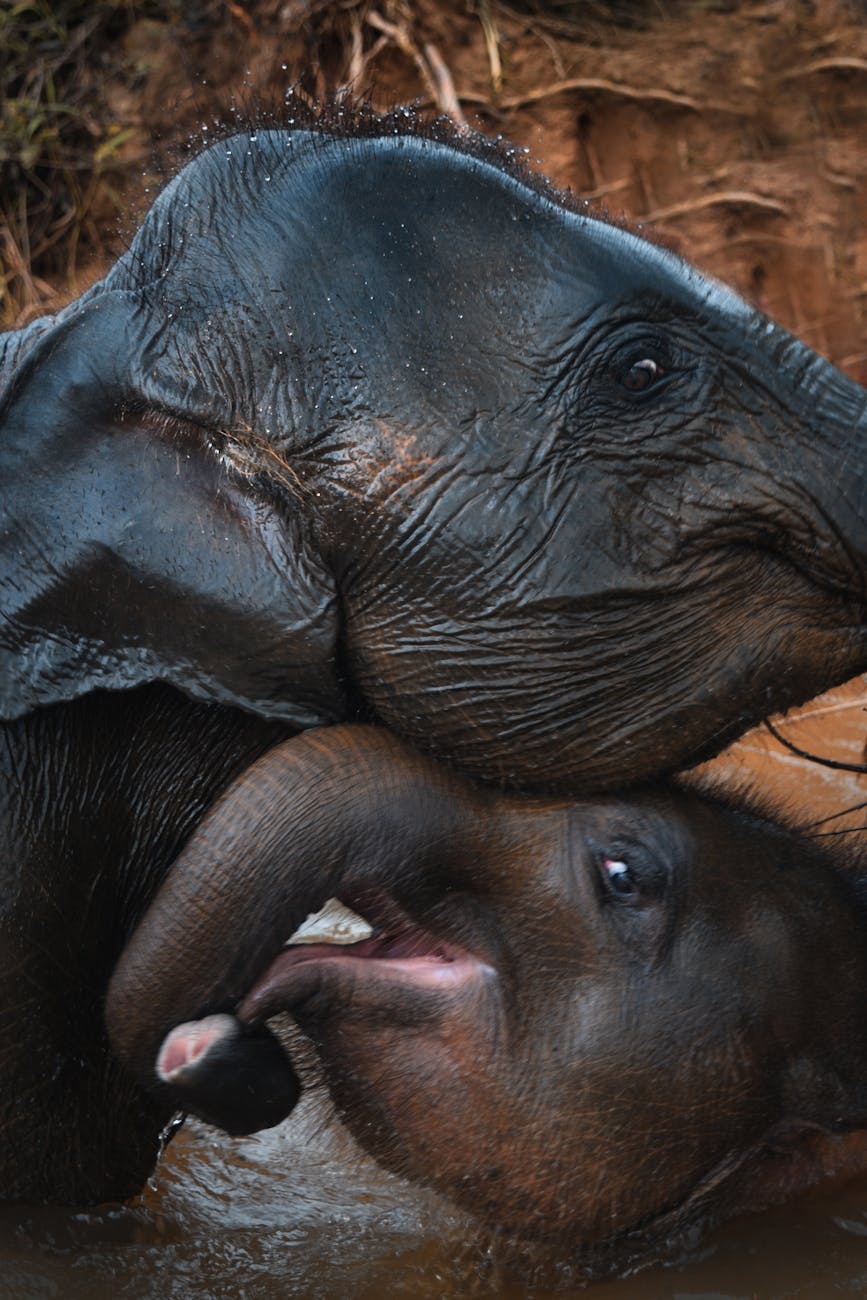
Abstract: Human-elephant relations involve interspecies mindshaping. Elephants engage in mindshaping with conspecifics through extensive multimodal communication, social learning, and normative cognition (including group-specific behaviours). Humans also practice mindshaping about elephants. When human communities represent elephants as minded creatures whose spaces must be respected, they are better positioned to manage coexistence amongst them. For this reason, it is important to recognize elephants as creatures whose communities are worthy of respect in their own right. Welfare considerations might require us to reflect on how we shape each other’s minds. We might reshape human and elephant behaviour by understanding human-elephant conflicts as a space for interspecies communication, the development of clear and stable signals, and the cultivation of dispositions that lend themselves to coexistence.
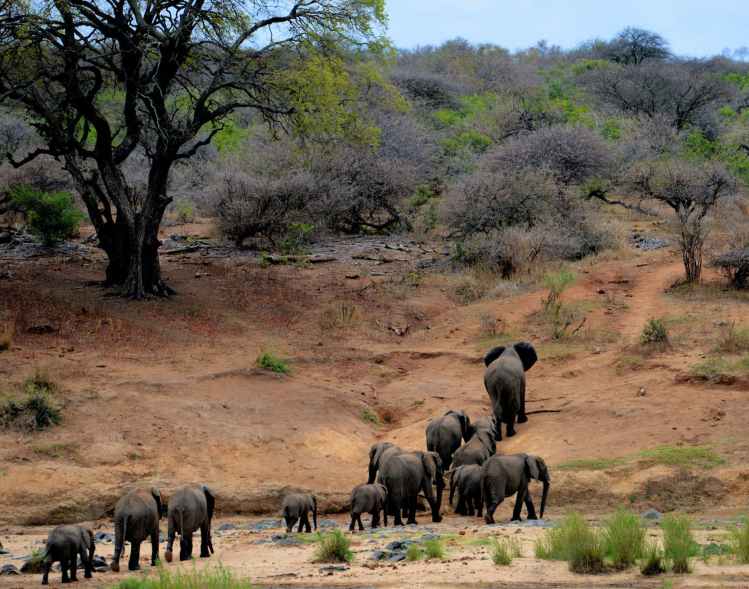
(Over 10,000 people have read this article!) Abstract: African (Bantu) philosophy conceptualizes morality through ubuntu, which is often characterized by the slogan, “I am because we are” (Mbiti 1990/1969, 106), emphasizing the role of community in producing moral agents. This moral community is characterized by care and cooperation, and respect for elders and ancestral knowledge. In turn, moral agency on this account does not derive from rational autonomy as an individual capacity, but from one’s contributions to and thus embeddedness in a moral community. We argue that the ubuntu conception of moral community describes some nonhuman animal communities as well. African elephant (henceforth: elephant) communities are highly cooperative, structured around elders, and governed by norms; elephants alloparent, protect their communities, mourn their dead, cherish their elders and pass on cultural knowledge between generations. Since elephant communities possess the defining features of a moral community according to ubuntu, we ought to recognize them as such, which may have implications for conservation and the mitigation of human-elephant conflict.

Abstract: Shared intentionality is a specific form of shared agency where a group can be understood to have an intention. It has been conjectured that humans are better equipped for collaboration than other animals because humans but not other great apes share intentions. However, exporting shared intentionality from a debate about the ontology of mental state attributions like intentions to groups does not seamlessly lend itself to evolutionary science. To explore and de-center the implicit assumptions of Western conceptions of cooperation, I look at Zhuangzi’s philosophy of (in)action. This philosophy treats the actions of individuals as always a form of co-action alongside other agencies to whom one must adapt. Thinking of collaboration as a product of skillful co-action, not shared intention, sidesteps asking about cooperation in “kinds” or levels. Instead, it directs attention to the know-how and behavioral flexibility needed to make our constant coordination adaptive.
2023 “Indigenizing Wild Animal Sovereignty,” Journal of Social Philosophy (first published 2022)
Abstract: Indigenous political philosophy has given a special place to the ecosystems that political communities share. On ecological grounds, Indigenous communities established shared and overlapping jurisdictions with each other and Settler states. This model of shared jurisdiction includes sharing with wild animal communities. I suggest that, upon such a political ontology, we can describe the political standing of wild animal communities. Unlike other advocates for wild animal jurisdiction, like Donaldson and Kymlicka’s suggestion of wild animal sovereignty, I contend that wild animals already have legitimate jurisdiction. It is given by the ecosystems we share, independent from any legal or political institution like sovereignty, which might protect such a jurisdiction. Our shared ecosystems demand respect from human and wild animal communities. Since wild animals typically have ecologically sustainable behaviour—intentionally or otherwise—they meet these demands legitimizing their jurisdiction. So, humans are obliged to share jurisdiction allowing wild animal communities autonomy within their territories.

Abstract: Michael Tomasello (2016) prominently defends the view that there are uniquely human capacities required for shared intentions, so great apes do not share intentions. I aim to show that these uniquely human capacities are sufficient but not necessary for shared intentionality by showing how the debate about whether or not great apes have shared intentions assumes a specific interpretation of Michael Bratman’s (1992) theory of shared intentionality, which I call the Roleplaying Model. While the Roleplaying Model may rely on uniquely human capacities, other models may not. I present an alternative model based on Margaret Gilbert’s (2009) theory of shared intentionality. I reconstruct Gilbert’s theory such that it is, in principle, compatible with nonhuman shared intentionality. To do this I substitute Gilbert’s account of obligation for Kristin Andrews’ (2020) account of animal social norms. No uniquely human capacities are required for shared intentionality on this modified Normative Model of shared intentions. This lets us rethink cases of prima-facie shared intentionality from field research on great apes. The Roleplaying Model’s denial of nonhuman shared intentionality creates a problem insofar as apparent shared intentional activity cannot be fully analyzed. The Normative Model resolves this problem.
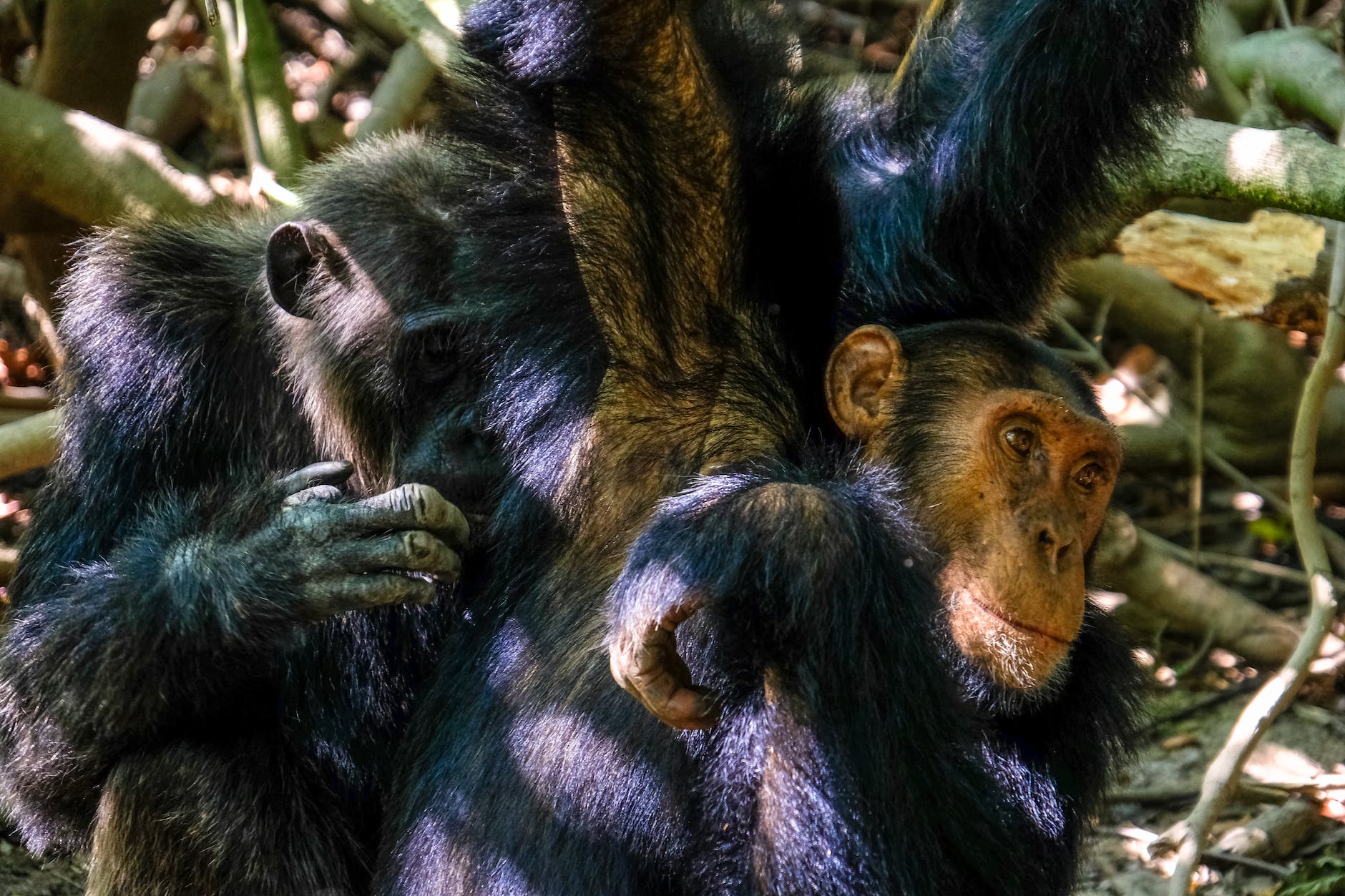
Abstract: Shared intentions supporting cooperation and other social practices are often used to describe human social life but not the social lives of nonhuman animals. This difference in description is supported by a lack of evidence for rebuke or stakeholding during collaboration in nonhuman animals. We suggest that rebuke and stakeholding are just two examples of the many and varied forms of social maintenance that can support shared intentions. Drawing on insights about mindshaping in social cognition, we show how apes can be stakeholders of a different sort in joint action. Drawing on pluralistic social maintenance methods of behavior enforcement, we show ape joint action can be supported by different forms of positive and negative social pressures, and not just protest. We explain how diverse relationships, contexts, social structures, and forms of communication may play a role in forming and successfully fulfilling joint commitments for humans, great apes, and other animals.
Dissertation
2021 Politically Engaged Wild Animals at York University (Toronto)

My dissertation is a philosophical analysis of the political character of wild animals’ entitlement to the land and waterways, on which they depend. I suggest we start with the Algonquin (Indigenous) idea of grounded authority, where ecology is a foundation for political power. In pursuit of sharing ecosystems with wild animals, I argue that humans can listen to wild animal behaviour to resolve conflicts and promote coexistence.
Book Reviews
Recent Presentations
2024 “Respect for ‘Ecological’ Relationships with AI” at the Canadian Philosophical Association, Montreal, QC (online).
2023 Poster: “Evolution of effective shared agency using Chinese philosophy of action” at PAMBA (philosophy of Animal Minds and Behavior Association), Madrid ES.
2023 “Nonhuman animals & Indigenous conceptions of respect” at the Vetmeduni Vienna “Animal Morality” Conference.
2021 “Wild Animals’ Grounded Authority” May-July at:
Centre for Advanced Studies “Worlding Beyond the Human,” Urbana IL (online)
Politicologenetmaal “Challenging Anthropocentrism,” Brussels BE (online)
International Society for Environmental Ethics, Turku FI (online)
2021 ” Wild animals’ political resistance,” at Dalhousie University, Halifax, NS (online)
2020 “Wild animals’ political resistiance,” for the International Society for Environmental Ethics, Blue River, OR, (online)
2020 “Rethinking shared intentionality in great apes,” for the International Social Ontology Society, Neuchatel CH, (online)
2019 “Joint Intentionality in Bonobos and Chimpanzees” for the American Philosophical Association, New York NY, January; & for the Comparative Cognition Society, Melbourne FL, April.
2018 “A Collective Emotional Theory of Love” for the Canadian Philosophical Association, Montreal QC, June.
 Dennis Papadopoulos